
Book Interview with Brian Fraser: What the Church Might Learn from Jazz

I love reading books and sharing them with others through author interviews on my Substack. Books have the power to inspire, challenge, and transform us, opening our minds to new ideas and possibilities.
My newest interview features Rev. Dr. Brian Fraser and his insightful new book, What the Church Might Learn from Jazz. I was delighted to endorse this book because it offers fresh wisdom and encouragement for churches seeking to navigate a rapidly changing world.
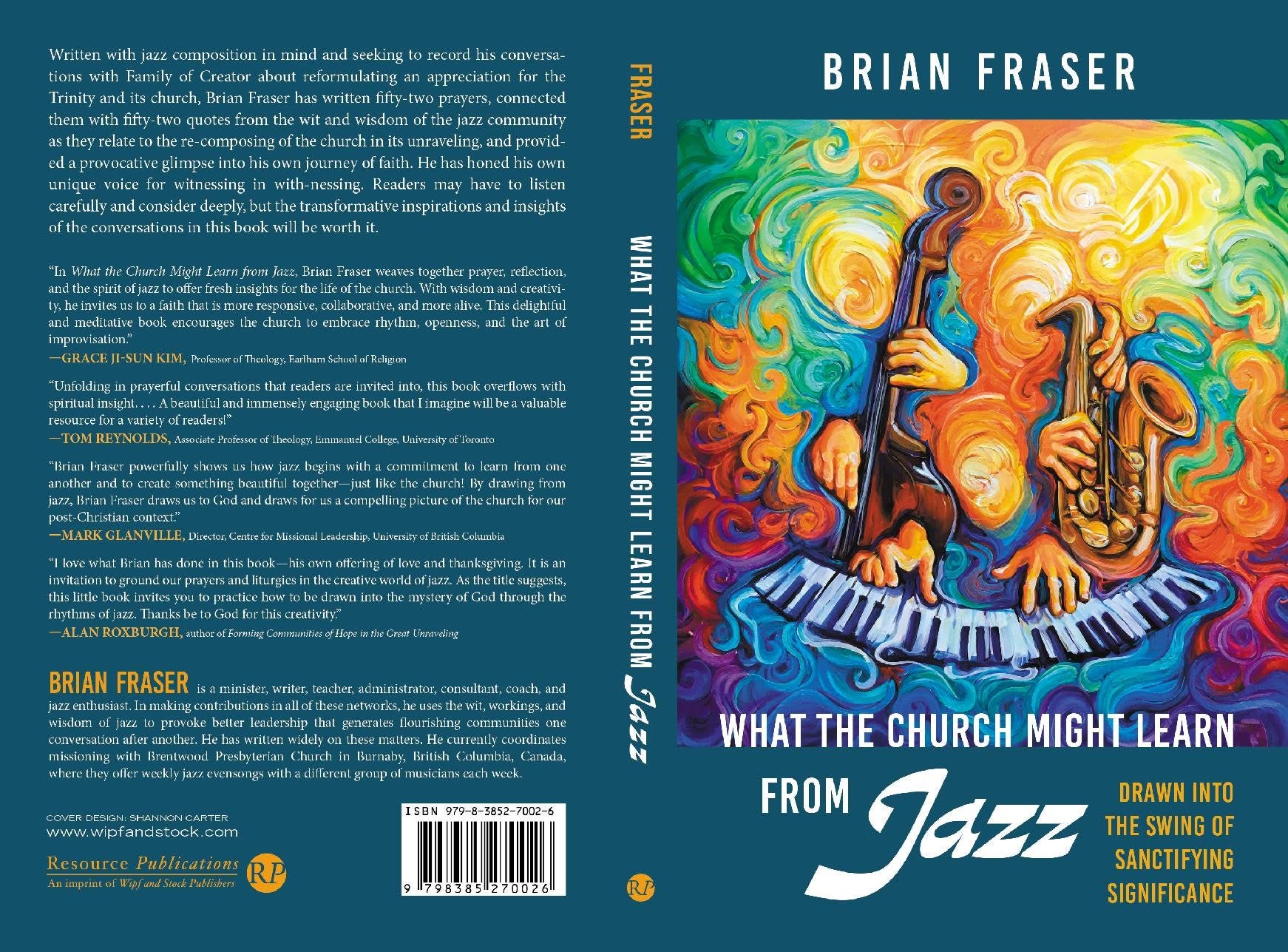
Book Interview with Brian Fraser: What the Church Might Learn from Jazz
1. What inspired you to write this book, What the Church Might Learn from Jazz, and what was that collaborative process like?
The impulse to write a book on church and jazz has been provoking me for at least 25 years now. When I left administration and teaching at St. Andrew’s Hall and Vancouver School of Theology, I founded a consulting and coaching company, Jazzthink, to encourage the leadership of nonprofits, especially faith-based nonprofits, to coordinate their organization’s flourishing better using the wit, wisdom, and workings of jazz as a model. One seminal influence in my considerations in those early years was Frank Barrett, a pioneer in the organizational development discipline of Appreciative Inquiry and a jazz pianist in the Tommy Dorsey Orchestra, who explored how a jazz band was an organization. Two others, Donald Schön and Stephen Nachmanovich, drew my attention to the fact that the most common form of jazz in human experience is ordinary conversation. These insights, along with many conversations to deepen and broaden them, inspired and instructed the slow composing of this book, as my voice in interpreting these ideas matured.
2. How did you get into jazz and then implement jazz into the church?
My fascination with jazz was provoked in the mid-1960s, with Oscar Peterson’s Canadiana Suite, when I began my studies in Canadian history, especially the organizational dynamics and leadership of the Presbyterian Church in Canada and the United Church of Canada. I was involved in a lot of ecumenical groups through the 1970s and 1980s. I became close friends with Gord Turner, then Secretary for Evangelism for the United Church and later senior minister at St. Andrew’s-Wesly United Church in Vancouver. Gord had played jazz trombone as youth in Montreal and brought weekly jazz vespers to STAW when he arrived in the mid-1990s. When I went back into the parish at Brentwood in 2009, we discovered that we had a sanctuary with wonderful acoustics. We started jazz worship services with a different jazz group every week and opened that space for the jazz community to rehearse, perform, record, and give back to the community through benefit concerts. That brought me into conversation with a broad range of Vancouver’s jazz community and enabled us to do several projects connecting jazz and Christianity at Brentwood – a songbook with originals based on 52 passages of scripture, 10 sacred jazz suites, most based on parables, and hymn swings with the Brentwood Hymn Swing Quartet.
In 2018, with funding from the Canadian government and the Calvin Institute of Christian Worship, we hired four young jazz musicians (one of whom, Noah Franche-Nolan, is now our coordinator of musicking at Brentwood) to interview about 80 jazz musicians and ministers who led jazz services about their sense of the connection between their spiritualities and their musicking. We’ve got about 100 pages of transcripts. Those conversations informed this book and I’m working on another book that will feature quotes from the interviews and my own reflections on them. We did not find any secularity among these musicians. They all recognized a spiritual dimension to their musicking. There is a delightful hybridity in their descriptions of their spiritual experiences, but they are in touch with some energy they recognize as inspiring and instructive. I’m beginning to explore the positive workings of what I’m calling ‘primality’ (the image of God among and within people) as opposed to the negative dynamics of ‘secularity’ that seems to draw the focus of so many looking to prescribe how the church should renew.
5. You connect Divine Energy and dancing. Can you say more about this, as it is a fascinating concept?
Back in the good old days of 60 Minutes, Mike Wallace interviewed Count Basie. At one point, Basie leaned forward and said to Mike, “Mike, if I’ve got their toes, I’ve got their souls!” Jazz makes you tap your toes, nod your head, play an imaginary instrument with your fingers, sway with your whole body, even while you remain seated. It’s the vibe of the Spirit working in and through us. It’s this whole being call and response dynamic that fascinates me. Then I found that old sociological study of the dance halls in Chicago that features in the book. They were places of belonging in a heartless industrial city. It may have been fleeting, superficial, and exploitative, but it generated connections that gifted some form of joy. Making those connections more lasting, deep, beneficial, and joyful is what I’ve seen jazz doing in church.
6. How do you want people to read your new book?
I’d like people to let the Spirit guide their engagement with the book. It’s written as 52 prayers; conversations I’ve had with the Divine Energy I designate as “Family of Creator.” You can listen in on one (perhaps each week) or read more of them at a time. I’m reformulating my ways of talking about the relationship, privileges, and responsibilities gifted to us by the Spirit of our Creator’s Christ, Jesus of Nazareth. I welcome you to listen in and join the conversation.
7. What is the big takeaway you want your readers to take from your book, What the Church Might Learn from Jazz?
In these times of unraveling and re-weaving the strands of mercy and grace that have sustained and enhanced the church’s missioning over the centuries and around the world, I hope readers feel encouraged to improvise with the gifts God has entrusted to their communities to become, ever more faithfully, wisely, and effectively, ambassadors of the forgiving and reconciling love revealed most clearly in Jesus Christ and actively at work among and through us in the Holy Spirit.


Author Bio:
The Rev Dr Brian Fraser is currently missioning with Brentwood Presbyterian Church in Burnaby, BC. He has degrees from the University of Toronto, The Ontario Institute for Studies in Education, Knox College, and York University. He has lectured at Knox College, been dean of St. Andrew’s Hall, the Presbyterian college at the University of British Columbia, associated with Vancouver School of Theology, and taught history and practice of ministry at VST. He founded a consulting and coaching company, Jazzthink, in 2002 to apply the wit, wisdom, and workings of jazz to organizational flourishing and the kinds of leadership that enable that to happen.
My Endorsement:
"In What the Church Might Learn from Jazz, Brian Fraser weaves together prayer, reflection, and the spirit of jazz to offer fresh insights for the life of the church. With wisdom and creativity, he invites us to a faith that is more responsive, collaborative, and more alive. This delightful and meditative book encourages the church to embrace rhythm, openness, and the art of improvisation."
--Grace Ji-Sun Kim, Professor of Theology, Earlham School of Religion
Special Events:
I look forward to preaching at St. Andrew Presbyterian Church this Sunday in Albuquerque, NM.
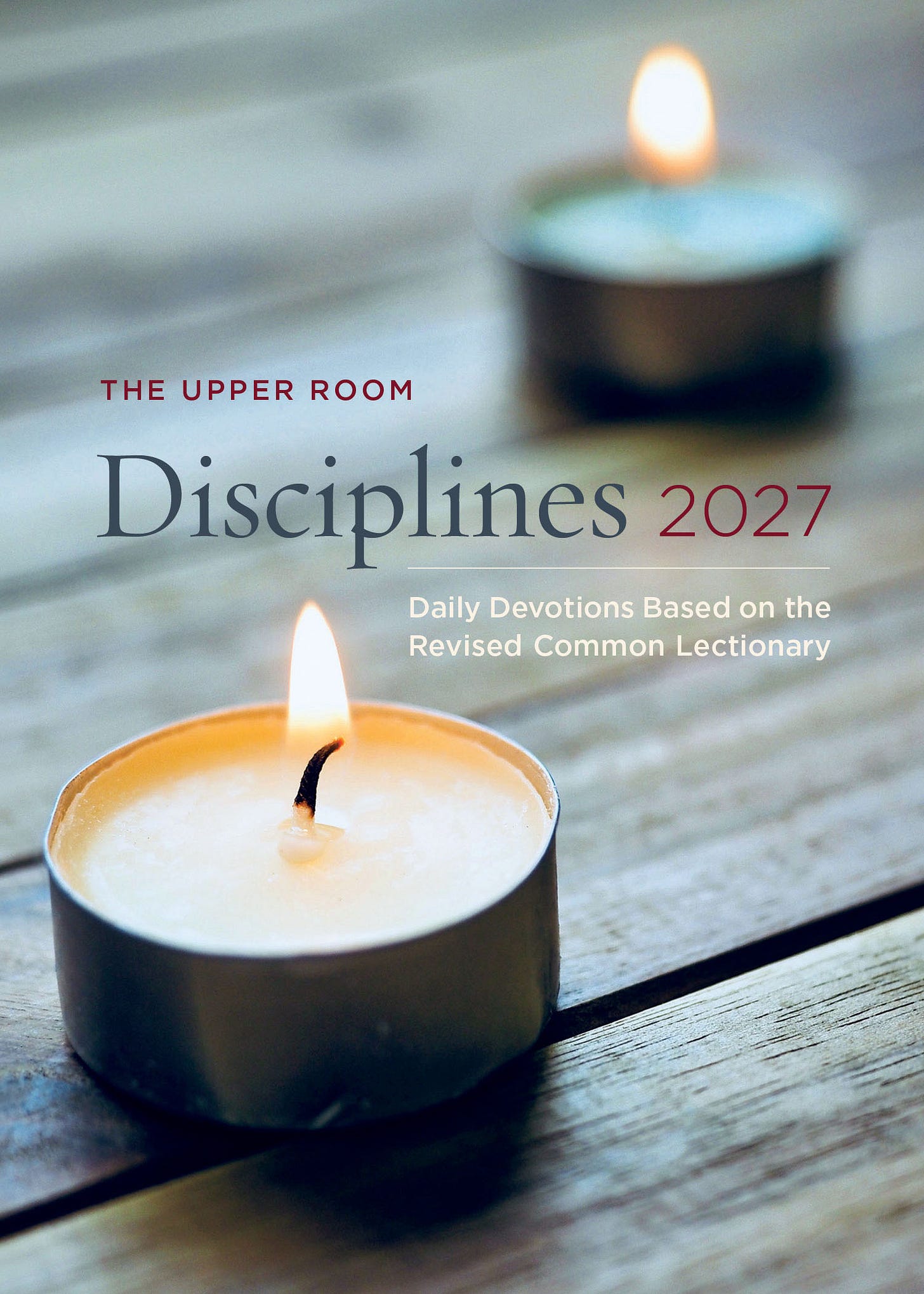
Grateful to Upper Room for sponsoring Madang Podcast. Save 20% on Disciplines 2027 at The Upper Room! Visit store.upperroom.org/Madang - and use promo code MADANG at checkout.
Please register for #Earthbound Retreat at Crieff Hills. Early bird discount ends on June 30th.


How cool - and what a gorgeous book cover!